

ModiGen Diacetyl model with logos

ModiGen™D Make Your Yeast Work Smarter.

ModiGen™D is our next-generation line of bioengineered brewing yeast, designed to eliminate diacetyl formation before it even starts, without additives, workarounds, or compromise. Engineered with an integrated ALDC expression system, ModiGen™D enables brewers to achieve consistent, diacetyl-free fermentations while preserving  yeast health and reusability.

Beer_ISO_IPA_02
Modigen_InsideCell_01

Defense Series: Precision-Built to Keep Diacetyl Out of Your Beer.  

Why ModiGen™D Works

No more mid-fermentation additions

ModiGen™D strains continuously produce ALDC during fermentation, eliminating the need to open

fermentors or introduce external enzymes. More convenient for you and lower risk of contamination. 

No additional processing agents required

ModiGen™ D carries built-in diacetyl control, cutting ingredient costs and complexity.

Stops diacetyl before it forms 

 Just like traditional ALDC enzymes, ModiGen™ D interrupts the diacetyl pathway upstream, resulting in cleaner beer, faster. 


Engineered for Balance: Clean Beer, Healthy Yeast

One of the biggest concerns with engineered strains is yeast viability. That’s why ModiGen™D  is built with targeted control over gene copy number, allowing each strain to:

 ➡️ Produce just the right amount of ALDC to suppress diacetyl.
 
  ➡️ Avoid excess enzyme activity that could impact amino acid production.
 
 ➡️ Maintain long-term viability, vitality, and reusability in repeated fermentations.
 
The result? Yeast that behaves like your house strain, only smarter.
 
Modigen_TooMuch_ALDC_Levels_02-1
Modigen_Adequate_ALDC_Levels_03

ModiGen™D keeps it simple.

ModiGen™D strains provide the same diacetyl prevention capabilities as comparable cultures on the market, without any additional hassle. Another key advantage of using classical, non-patented technology to engineer our strains is that we’re able to keep it simple for brewers

Bottom line: Brewing with ModiGen™D yeast strains means no nonsense. We propagate the yeast, you use the yeast, your customers enjoy the beer. It’s that simple! 


ModiGen_1x1_NoFees_02

But Don't Just Take our Word for it. 

Real Data From Real Brewers


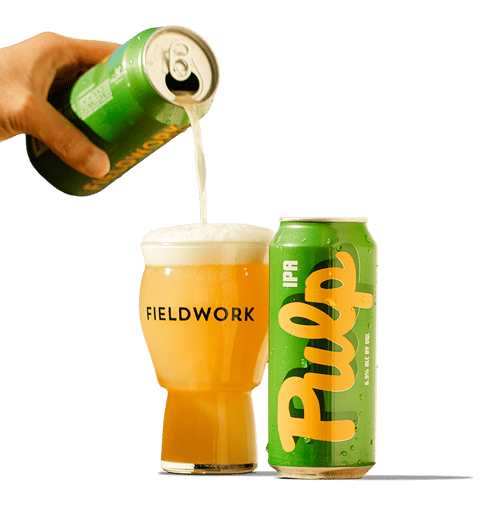
Pulp-Glass-Fieldwork-Brewing
fw_wordmark_solid_black

We started brewing hazies in 2015, and after trying every strain under the sun, we switched to Yeast Bay's Vermont Ale in 2020. It gave us the best balance of yeast character, haze stability, reliable harvests and predictable performance, and its attenuation lands right in the pocket we aim for.

Residual diacetyl was always extremely low, but now with the ModiGen™D version, we can brew the exact same hazies and if someone tells us they’re getting diacetyl in the beer, we can scream “Inconceivable!” and laugh maniacally until it gets awkward for everyone.”

- Alex Tweet | Fieldwork


Back Forty logo
Back Forty Brewing

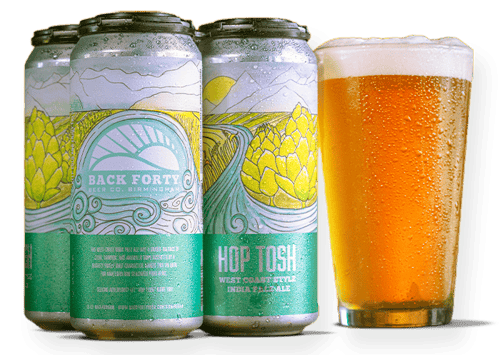
"We’ve had a solid experience with both ModiGen™D California Ale (WLPMD001) and ModiGen™D London Fog (WLPMD066) so far. We’ve run them across many of our core beers, including Truck Stop Honey, Naked Pig, Hop Tosh, and Crow Point, and they’ve held up well across the lineup.

Our results with ModiGen™D strains have been consistent. We haven’t had a single failed forced diacetyl test, allowing us to move beers into packaging with confidence.

Strong viability across generations also gives us the same repitchability we achieved with the parent strains.

If you’re considering ModiGen-D strains for your core lineup, we’d recommend them."

- Tosh Brown | Back Forty


S2S-Brewing-1
Sound to Summit Logo 1

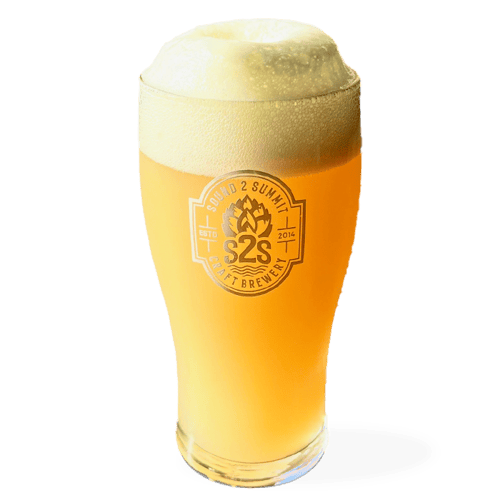
"We swapped two ModiGen-D strains into a pair of our core beers: ModiGen™D German Lager (WLPMD830) in Boat Beer, our American light lager, and ModiGen™D California Ale Yeast® (WLPMD001) in Apex, our West Coast IPA. Both performed exceptionally well, giving us exactly what we wanted: a clean, crisp lager and an IPA that lets our hop profile shine.

The ModiGen™D technology built into these strains has also yielded noticeably shorter fermentation times, improving cellar efficiency."

- Daniel Custer | Sound 2 Summit


Beer_ISO_IPA_02
Erratic Logo 1

"We ran WLPMD830 ModiGen™D German Lager on a Munich-style Festbier and a Bavarian-style Marzen. Both beers are phenomenal, with great flavor, and I couldn’t have asked for better results.

Lagers that come out like this make me want to brew them all year round. No off-flavors, well-rounded usual bread notes, and a nice little hop profile."

- Michael Reina | Erratic Fermentations


Available ModiGen™D Strains

Strain_Cards_WLPMD001_Cali
Strain_Cards_WLPMD066_London
Strain_Cards_WLPMD830_German
Strain_Cards_WLPMD4000_Vermont_02

ModiGen™D - Designed for Brewers Who Expect More

Whether you’re crafting lagers with razor-sharp crispness or ales that demand clean finishes, ModiGen™D helps you hit flavor targets with less variability and more control.

Frequently Asked Questions

How does diacetyl form in beer?

Diacetyl formation begins in fermenting beer when α-acetolactate (a precursor for amino acids valine and leucine) builds up in excess inside of yeast cells and is secreted. Once secreted into the beer, α-acetolactate slowly and spontaneously oxidatively decarboxylates to diacetyl. Once this  occurs, the cells must reuptake the  diacetyl, which is then slowly converted to acetoin and 2,3-butanediol.  

Once diacetyl formation occurs, reuptake and reduction to other less perceptible molecules is a slow process. As a result, the natural diacetyl reduction process is often the rate limiting step when transferring a beer from fermentation/conditioning to packaging, increasing tank residency time and lowering cold-side production efficiency. 

Diacetyl_Formation_inBeer_02


How do ModiGen Defense strains prevent diacetyl production?

ModiGen™D strains are engineered to contain a gene that codes for alpha acetolactate decarboxylase (ALDC) enzyme expression inside the cell. ALDC directly reduces a portion of intracellular α-acetolactate to acetoin, ensuring α-acetolactate will not build up in excess and be secreted into the beer.  

Modigen_Equiped Cell


How are ModiGen Defense strains different than some of the other comparable strains on the market?

Excessive ALDC production inside the cell above what is required to prevent α-acetolactate secretion may deplete the intracellular α-acetolactate levels to the point the cell cannot effectively produce the amino acids valine or leucine on their own.

Once fermentation is complete and cells no longer have access to a rich media (i.e. during flocculation,  harvesting and storage), inability to synthesize  certain amino acids may affect cell health and future performance. 

Modigen_TooMuch_ALDC_Levels_02-1Modigen_Adequate_ALDC_Levels_03

We’ve found it only takes a minimal amount of  ALDC production inside the cell to achieve effective diacetyl prevention. As a result of the  genetic engineering techniques employed to insert the ALDC gene, ModiGen™D strains have good control over the number of ALDC genes inserted into the yeast genome, and therefore the amount of enzyme produced. At the levels of ALDC ModiGen™D strains produce, we’ve shown these strains can prevent diacetyl production while not significantly impacting yeast health and repitchabilty.  


What strains are available with ModiGen Defense technology?

Currently, we offer 4 strains with ModiGen Defense technology: 

  • WLPMD001 ModiGen™D California Ale Yeast®

  • WLPMD066 ModiGen™D London Fog Ale Yeast®

  • WLPMD830 ModiGen™D German Lager Yeast

  • WLPMD4000 ModiGen™D TYB Vermont Ale Yeast

Do ModiGen™D strains keep diacetyl levels consistently low during fermentation, even in heavily dry hopped beers?

Yes, all ModiGen™D strains available maintain diacetyl levels well below threshold levels of 50 -100ppb. At most points during fermentation, diacetyl levels are held consistently below 15 ppb, even in heavily dry hopped beers (~2.2 lbs/barrel). As compared to each parent strain, the ModiGen™D strains perform exceptionally well with respect to maintaining low diacetyl levels.

Diacetyl_Spike_Charts_01-02


Diacetyl_Spike_Charts_01-03


Are the fermentation kinetics and yeast character of ModiGen™D strains the same as the parent strains?

Yes, at both bench scale and brewery scale, each ModiGen™D strain performs similarly to their parent strain with respect to fermentation kinetics and the character of the finished beer. 

Can I repitch ModiGen™D strain with consistent results?

Yes, you can repitch ModiGen™D strains as you have with the parent strains.  We’ve conducted serial growth, harvesting and repitching tests in house and shown that yeast diacetyl prevention and fermentation kinetics remain consistent through at least 50 generations (cell doublings).

Are breweries contractually limited on the amount of beer they can make with a single pitch (i.e. a 10 bbl pitch can only be repitched 5 times to make a maximum of 50 bbl)?

No, we do not contractually limit the number of times a brewer can repitch ModiGen™D strains. In fact, you won’t have to sign any kind of contract or material transfer agreement! You can reuse the yeast as many times as your processes supports.

Do commercial brewers have to pay royalties onbarrels of beer produced with ModiGen Defense strains?

No, brewers will not be required to pay royalties on barrels of beer produced with ModiGen™D strains, regardless of brewery size.

Do breweries have to pay licensing fees to access ModiGen Defense strains?

No, breweries will not have to pay any licensing fees to access Modigen™D  strains. We do not employ any patented/licensed technology to create ModiGen strains, allowing us to eliminate these pass-through costs.

Is the ALDC enzyme safe?

Yes, ALDC enzyme is safe. Recombinantly produced soluble ALDC is a process agent  commonly added to wort/beer, and has undergone extensive safety evaluation documented in GRAS filing GRN 587. In addition, ModiGen™D strains produce the ALDC enzyme intracellularly, resulting in most of the enzyme being removed with the yeast during flocculation/separation post-fermentation.

Are ModiGen Defense strains safe?

Yes, we take several steps to ensure the safety of ModiGen™D strains, including validation that antibiotic selection markers employed during the engineering process are removed in the final strain, and that no new unintended or harmful gene products are produced around the ALDC gene integration site. Other than the production of the ALDC enzyme, ModiGen™D strains are genetically identical to their parent strains.

Geographical restrictions on sales?

Yes, due to strict regulations on GMOs in many countries, ModiGen™D strains are only currently available for sale and use in the United States.


Modigen_NoGimmick_OrderNow_01

Sign Up for Our Newsletter

Neva Lab Work Pipetting

Need More Information?

Our Customer Service Team is here to help! 

Recent Posts

Featured image: Pitch to Profit
Brewing Technical
Analytical Lab
QA/QC
Pitch Rate
Tips From The Pitch
Oct 19, 2026

Pitch To Profit

Yeast isn't just an ingredient Yeast is a living, flavor-producing powerhouse of an organism. What other ingredients are still thrivin’ and dividin’ when it comes time to brew another beer? And because of this, brewers are afforded a massive opportunity to be their own propagators. Keep that culture healthy and viable; it will reward you…

Read more
Featured image: The Future of Fermentation
Brewing Technical
Alcohol Tolerance
Sour Beer
Titratable Acidity
Sep 18, 2026

The Future of Fermentation

What's Next for Yeast & Fermentation? For centuries, yeast was the unseen force behind beer, quietly converting sugars into alcohol without fully revealing its role. That changed in the 19th century when Louis Pasteur identified yeast as a living organism responsible for fermentation, transforming brewing from tradition into science. Shortly after, Emil Christian Hansen at…

Read more
Featured image: The Story Behind WLP079 Suava Ale Yeast
Biotransformation
Dry Yeast
Aug 20, 2026

The Story Behind WLP079 Suava Ale Yeast

In modern brewing, the vast majority of beers are fermented using a narrow selection of highly domesticated industrial yeast monocultures. However, recent genetic research has unlocked historical yeast populations preserved for centuries by farmhouse brewers in Northern and Eastern Europe. A prominent result of this research is WLP079 Suava Ale Yeast (referenced in early developmental…

Read more